
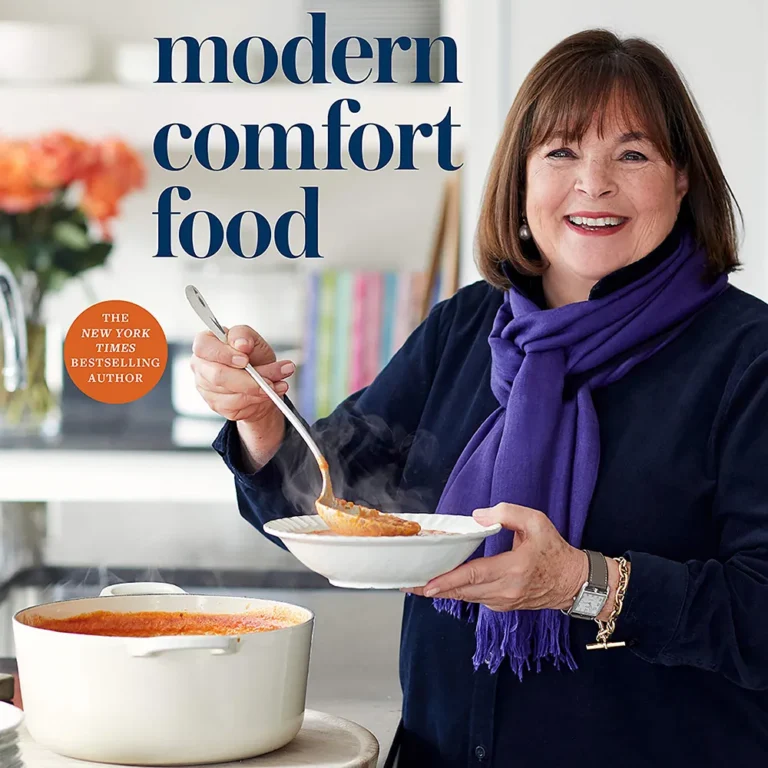
Ina Garten’s Modern Comfort Food Cookbook Review: Is It Worth It?
My Rating: 7.9/10
Ina Garten wrote Modern Comfort Food during one of the strangest periods in recent history: the middle of the COVID-19 pandemic.
Released in October 2020, the book is built around the idea that comfort food can make people feel happy, satisfied, and a little more grounded. And honestly, that makes a lot of sense for the time it was released.
But does Ina Garten’s version of comfort food actually work in a regular home kitchen?
I cooked three recipes from Modern Comfort Food to find out.
And one of them involved goat cheese and enchiladas. I have some thoughts.
How I Score Cookbooks
Before getting into the recipes, here’s how I rate cookbooks.
I score recipes on two things: outcome and CPR, or cussing per recipe.
The outcome score is pretty straightforward. How did it taste? Would I make it again? That gets a score from 1 to 10.
CPR is my difficulty score, but it isn’t simply about whether a recipe is technically difficult. It’s about how frustrated I am while making it.
There’s a big difference between a recipe that takes three hours but is completely relaxing and one that has you swearing at a mandolin at 6 p.m. on a Tuesday.
Low CPR: Easy, minimal stress.
High CPR: You may need to open a bottle of wine.
A recipe can have a great outcome and a terrible CPR, or the other way around. Both matter when deciding whether a recipe is actually worth making.
What Is Modern Comfort Food?
For anyone unfamiliar with Ina Garten, she is the Barefoot Contessa. She worked in the White House before making a pretty dramatic career pivot and purchasing the Barefoot Contessa specialty food store in the Hamptons in 1978.
She had no formal culinary training. She simply went for it.
She ran the store for nearly 20 years before moving into cookbooks and television. Today, she has 13 bestselling cookbooks and a Food Network show, along with some very recognizable phrases like “store-bought is fine” and “how easy is that?”
Her whole brand is basically elegant but accessible.
She makes food that looks impressive without making you feel like you need to be a professional chef to pull it off.
Modern Comfort Food contains 85 recipes covering cocktails, lunch, dinner, vegetables and sides, dessert, and breakfast.
And Ina’s definition of comfort food is a little more elevated than mine.
You get familiar dishes like enchiladas, fajitas, and chocolate chip cookies, but they’re mixed in with things like banana rum trifle and Maine lobster stew.
It’s comfort food, but with Ina’s fingerprints all over it.
Recipe #1: Baked Cod with Garlic and Herb Ritz Crumbs
Outcome: 9/10
CPR: 1/10
First up was the baked cod with garlic and herb Ritz crumbs.
Technically, I didn’t use cod. I used haddock because I refuse to cook cod.
Fortunately, this recipe is extremely forgiving when it comes to the fish. You could use haddock, tilapia, halibut, or another similar fish.
And this recipe was ridiculously easy.
The fish goes into the pan with wine and lemon, then gets topped with buttery Ritz cracker crumbs and baked.
That’s basically it.
The hardest part was crushing the crackers, which I handled by putting them in a Ziploc bag and attacking them with a rolling pin.
CPR: 1.
The outcome, however, was excellent.
9/10.
The fish cooked perfectly, and the buttery cracker topping was fantastic. The one thing I’d caution you about is salt. Ritz crackers are already pretty salty, so you don’t need to go crazy with additional salt.
And don’t skip the fresh lemon at the end.
That squeeze of lemon is what really makes the dish work.
Even better, some of the Ritz crumbs fall into the wine and lemon sauce at the bottom of the pan. Those little bits were genuinely fight-over-the-last-bite good.
If you’re nervous about cooking fish, this recipe alone could justify buying the book.
Recipe #2: Skillet-Roasted Chicken and Potatoes
Outcome: 7/10
CPR: 4/10 with a mandolin
CPR: Probably 7/10 without one
Next was skillet-roasted chicken and potatoes.
This recipe requires a little more planning because the chicken starts with a buttermilk brine that needs to sit for four to twelve hours.
I actually set a reminder on my phone so I wouldn’t forget.
The potatoes also need to be sliced very thinly. I have a mandolin, so this was easy for me.
If you don’t have one, expect this recipe to take considerably longer.
And you really do need the potatoes to be thin. If they’re too thick, they won’t cook properly.
The biggest problem I had was the pan sticking.
Despite all the chicken fat, my potatoes basically glued themselves to the sides of the pan. Cleanup took about 15 minutes plus some soaking.
Next time, I’d either grease the pan more aggressively or line it with foil.
The outcome was still pretty good.
7/10.
The chicken was flavorful and tender thanks to the buttermilk brine and Dijon mixture. The potatoes got incredibly crispy and delicious.
Unfortunately, I didn’t get the super-crispy chicken skin I was hoping for.
I also cooked the chicken beyond 165°F because I personally prefer my chicken a little more well done.
The biggest takeaway for me was actually the brine. I’ll absolutely use that technique again.
But as an overall meal, this felt more like a weekend or special-occasion recipe than an easy weeknight comfort meal.
Recipe #3: Cheesy Chicken Enchiladas
Outcome: 6/10
CPR: 3/10
And now we get to the recipe I have some feelings about.
Cheesy chicken enchiladas.
First, this is not a traditional enchilada recipe.
This is Ina’s version of enchiladas.
The CPR was only a 3, although most of my cussing came from grating what felt like approximately seventeen pounds of cheese.
There was a lot of cheese.
I followed the recipe and used goat cheese in the filling, even though my family doesn’t particularly like goat cheese.
And honestly?
I’m not convinced it was worth it.
The goat cheese was more expensive, and I couldn’t really taste it in the finished dish. Neither could my family.
For the topping, I used a Mexican cheese blend with Monterey Jack, cheddar, asadero, and queso quesadilla cheese because that’s what my family prefers.
Maybe that’s why the goat cheese disappeared.
Either way, it didn’t really add anything for me.
I also ended up with a lot of filling. I was only able to make six tortillas, and they were packed tightly into the 9-by-13-inch pan.
They were practically shoulder-to-shoulder.
At one point, they looked more like burritos than enchiladas.
The finished dish scored a 6/10.
They were tasty, especially with the Mexican cheese blend, avocado, and sour cream on top.
But if you’re expecting traditional enchiladas, this isn’t really that.
Think of it more as a cheesy baked chicken-and-tortilla situation with Ina Garten’s twist.
If I made them again, I’d skip the goat cheese and use the Mexican cheese blend throughout.
So, Is Modern Comfort Food Actually Good?
Yes.
I think Modern Comfort Food is a really solid cookbook.
The baked fish was brilliant: approachable, foolproof, and genuinely delicious.
The chicken and potatoes had great flavor, and the buttermilk brine is a technique I’ll definitely use again.
The enchiladas were good, but they weren’t traditional enchiladas, and I didn’t think the goat cheese added enough to justify the extra cost.
Everything I made tasted good. Some recipes definitely worked better for me than others, but there wasn’t anything that I would consider a complete failure.
And I want to acknowledge something here: I’m a huge Ina Garten fan.
I grew up watching her. I’ve read her memoir. I find her genuinely inspiring.
So I went into this book wanting to like it.
And I do like it.
But liking a cookbook doesn’t necessarily mean it’s the right cookbook for me.
After testing these recipes, I think I’ll be writing down that fish recipe and passing the book along to a friend who is more likely to cook this style of food regularly.
That’s not because it’s a bad cookbook.
It’s because it isn’t exactly my everyday cooking style.
Who Should Buy Modern Comfort Food?
I’d recommend this book, especially if you love Ina Garten’s approach to cooking and want slightly elevated versions of familiar comfort food.
But there’s an important distinction.
Ina’s idea of comfort food sometimes involves:
- Planning ahead
- Specialty equipment
- Lots of butter
- Lots of cheese
- Cream
- Lemon
- And possibly a drink
If that’s your idea of comfort food, you’re probably going to love this book.
If your version of comfort food means fast, light, inexpensive, and minimal cleanup, you’ll probably want to pick and choose your recipes.
My Final Score: 7.9/10
For my overall cookbook score, I look at two major components: book quality and recipe outcomes.
Book quality includes things like ingredient accessibility, instruction clarity, photography, layout, reliability, and writing voice.
For Modern Comfort Food, I gave the book quality a 9.2/10.
The three recipes I tested averaged 7.3/10.
I weight recipe outcomes at 70% because I think that’s the most important part of a cookbook, while book quality makes up the remaining 30%.
That gives Modern Comfort Food a final score of:
7.9/10
One caveat: I’m still refining my scoring system, so this weighting may change as I review more cookbooks.
And, of course, three recipes can’t tell me everything about an 85-recipe cookbook. It’s entirely possible that I happened to pick three of the best recipes—or three that simply appealed to me personally.
But based on what I cooked, 7.9/10 feels right.
Modern Comfort Food is a good cookbook, and for the right cook, it could be a great one.
For me, though?
I’ll keep the fish recipe.
And I’ll let someone else keep the cookbook.