Okay, so I have a problem.
The problem is that I cannot stop researching cookbook releases, and now I know way too much about what’s coming out in 2025. After going down an embarrassing number of “best of 2025” lists, one thing became very clear: the same five cookbooks keep showing up everywhere.
These are not necessarily my top cookbooks of the year. I haven’t cooked from most of them yet, mostly because I already own 44 cookbooks that I’m committed to actually using in 2026. But if you’re trying to decide what’s genuinely worth buying versus what you should absolutely borrow from the library first, here’s my very honest take on the books everyone won’t shut up about.
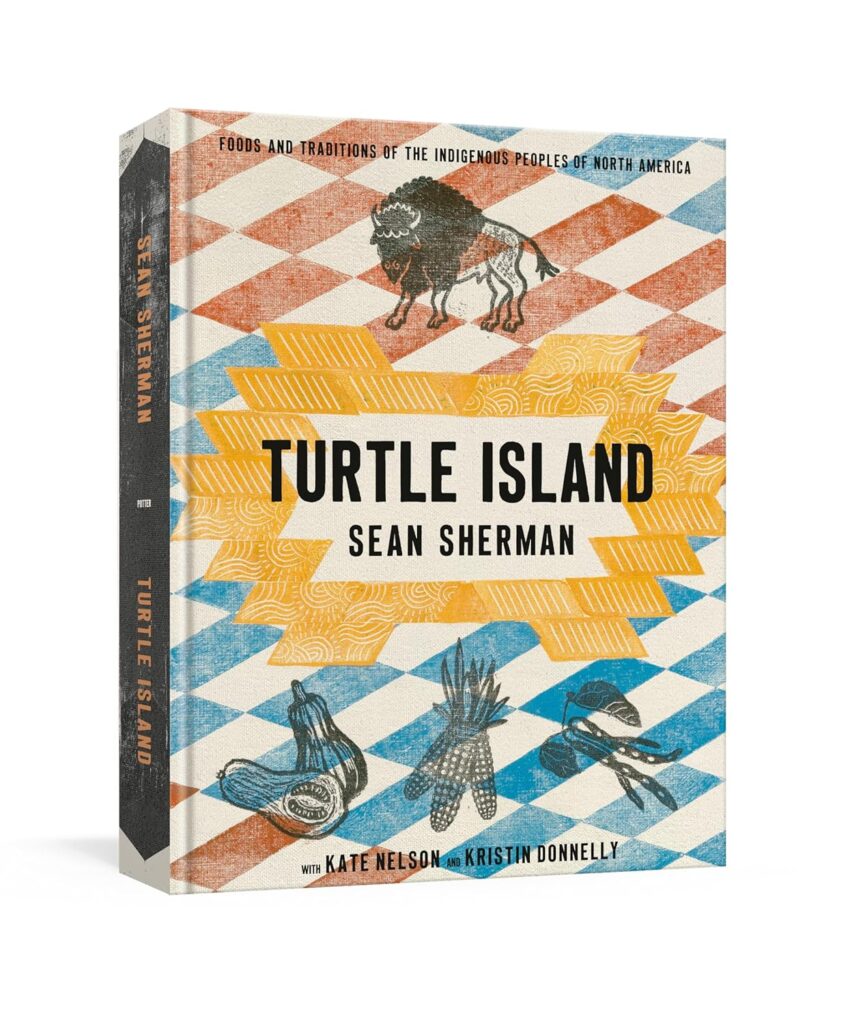
Turtle Island
by Sean Sherman
Sean Sherman is doing something genuinely important here. This isn’t just another cookbook. It’s a reclamation of Indigenous foodways that were erased, ignored, or flattened for centuries.
The book is deeply rooted in pre-colonial ingredients and techniques: bison, wild rice, foraged plants, corn in its many forms, and preparations that feel both ancient and intentional. There’s a lot of historical context alongside the recipes, which makes it as much a learning experience as a cooking one.
That said, let’s be real. This is not a weeknight dinner book.
This is a “I want to fundamentally expand how I understand American food” book. You’re not grabbing this on a Tuesday hoping to throw something together in 30 minutes. You’re cooking with focus, with intention, possibly with a plan to visit a specialty grocer or forage something yourself.
And honestly? That’s why I’m buying it. It fills a massive gap in my collection, and it’s doing something I haven’t seen done at this level anywhere else. This one earns a permanent spot on my shelf.
Boustany
by Sami Tamimi
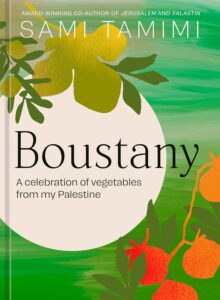
If you know Sami Tamimi, you probably know him from his work with Ottolenghi. This is his first solo cookbook, and it focuses on Palestinian home cooking. Not restaurant plates, not “modernized” dishes, but the food people actually cook and eat at home.
That alone makes this book important. Palestinian cuisine is wildly underrepresented in mainstream cookbooks, and Tamimi is uniquely positioned to present it with both authenticity and approachability.
From what I’ve seen, the recipes emphasize vegetables, grains, legumes, olive oil, spices, and everyday cooking techniques rather than spectacle. This feels like the kind of book that teaches you how people eat, not just what photographs well.
I’m very interested, but this is a library first book for me. I want to see whether it’s something I’ll cook from repeatedly or if it’s more of a one-time read that I deeply appreciate but don’t return to often.
Good Things
by Samin Nosrat
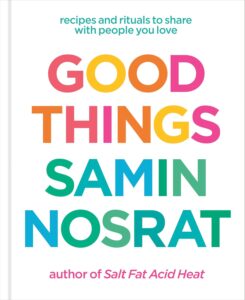
People lost their minds when this was announced, and honestly? Fair. Salt, Fat, Acid, Heat is basically required reading at this point. Samin has a rare talent for explaining cooking in a way that actually sticks: technique forward, intuitive, and calming instead of intimidating.
From everything released so far, Good Things seems to lean into comfort, intuition, and pleasure in cooking, rather than strict rules or rigid recipes. Which I love in theory.
My only hesitation is this: will it tell me anything I don’t already know after years of obsessing over SFAH?
This is a library borrow first for me. If I find myself wanting to flip through it constantly or use it as a reference the way I do SFAH, then it might earn shelf space. Also, let’s be honest, it’s going to be absolutely gorgeous.
Salt Sugar MSG
by Calvin Eng
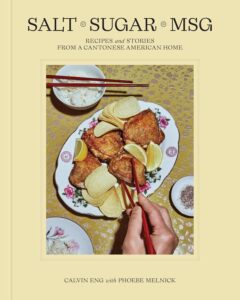
FINALLY. Someone puts MSG right in the title where it belongs. Calvin Eng’s restaurant, Bonnie’s, has been everywhere in NYC food media, and this book is unapologetic about Cantonese American cooking as it’s actually eaten, not filtered through white food media expectations.
The recipes focus heavily on flavor building, balance, and technique, with zero interest in apologizing for ingredients like MSG. If you still think MSG is bad for you (it’s not), this book will fix that immediately.
This is exactly the type of cookbook I want to see more of: culturally specific, technique forward, and not dumbed down. That said, still library first. I want to cook from it and see how the recipes perform in a home kitchen. If the techniques are as solid as I hope, then we’ll talk about whether it needs to live in my kitchen permanently.
Six Seasons of Pasta
by Joshua McFadden
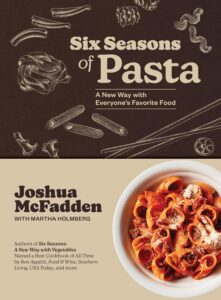
I already own Six Seasons, and it’s very good. I’m genuinely curious what McFadden does when he narrows the focus.
The seasonal approach is the real draw here. Cooking pasta based on what’s actually available throughout the year sounds obvious, but almost no pasta cookbooks actually do this well. My hesitation is the same one I have with most pasta books: they’re either all the same five shapes with different sauces, or so complicated that you need a full pasta lab in your basement.
I’m hoping this lands somewhere in the middle. Interesting enough to teach me something new, but realistic enough that I’ll actually make it on a weeknight.
This one is on my Christmas list, so we’ll see if Santa brings it.
So… Should You Actually Buy Any of These?
Here’s my real advice: use your library. Most libraries carry cookbooks, and if yours doesn’t have these yet, you can usually request them. Cook from the books. Live with them. See which ones you actually return to.
I’m only buying Turtle Island immediately because it’s doing something completely unique that I know I’ll want to revisit. Everything else? I’m borrowing first or putting it on my Christmas list, even the ones I’m very excited about. Because I already have 44 cookbooks I’ve committed to cooking through in 2026. A new book has to truly earn its place before it gets added to that pile.